
Boat transport cost is not a sticker price. A haul quote is built from the boat’s loaded measurements, the miles the truck has to run (including empty positioning), any oversize permits or escorts, how the boat has to ride, and yard or marina work at each end. Two boats of the same length can price very differently if one is trailerable and legal-width and the other needs a hydraulic trailer and state permits. This Guide from Boat Transport Near Me (Logi Transports LLC, Sebastian, FL) explains what actually moves the number, and what to send so a broker can price the move instead of guessing.
You will not find a published per-mile rate here. Online per-mile ranges are rarely tied to a primary source. When you are ready to request a number, use our how to get a boat quote checklist so the first reply is a plan, not a placeholder.
The Measurements That Move the Price
Length overall (LOA), beam, loaded height, and weight decide the trailer, the route, and whether the load is legal or permitted. Give them as the boat will travel, not as they appear on a sales brochure. Documentation length often excludes fittings that stay on for a road move, such as outboard brackets or a swim platform.
Length overall
LOA tells the carrier how long a trailer is needed and whether the load will overhang. Measure from the foremost fixed point that will stay on (pulpit, anchor roller, or bowsprit) to the aftermost fixed point (swim platform, outboards tilted for travel, or a fixed dinghy davit).
Beam and the 8-foot-6-inch breakpoint
Beam is the measurement that most often changes a quote. On the National Network, 23 CFR 658.15 (Width) says no state may impose a width limit of more or less than 102 inches, or about 2.6 meters (102.36 inches), except Hawaii, which may keep a 108-inch maximum. The same section allows a state to grant special-use permits for vehicles that exceed 102 inches.
That makes 8 feet 6 inches the common legal-width line for a commercial load on Interstate and other National Network highways. If the loaded width, including rub rails, trailer bunks or pads, and anything that sticks out, stays at or under that line, the boat can usually move without an overwidth permit. A few inches past it, and the haul becomes a permitted oversize move. Measure at the widest point the load will have on the road.
Height on the trailer
Measure height from the ground to the highest point that will stay installed: T-top, tower, windshield, radar arch, antenna base, or mast step. If you measure from the trailer bunks, add the trailer height. Unlike width, there is no single federal height cap. The Federal Highway Administration’s Questions and Answers About Vehicle Size and Weight states that states set their own limits, typically between 13 feet 6 inches and 14 feet. Crossing a state limit can mean overheight permits and sometimes an escort with a height pole. Our comparison of trailerable vs yacht boat transport explains why a few inches can change the equipment and the corridor.
Weight
Weight decides which trailer and tractor can legally carry the boat, and whether an overweight permit is needed. Include engines, remaining fuel or water, the trailer if you own it, and any cradle. When you are unsure, round up and send a photo of the hull ID or a recent survey page.
Miles, Empty Positioning, and Extra Stops
Loaded miles are the distance the boat actually travels from pickup to delivery. They are not the only miles in the quote. The truck and specialized trailer have to get to your marina or driveway first. If that equipment is coming from another job a state or two away, those empty positioning miles are part of the work. A haul between two busy boating markets is usually easier to match than one that sends a hydraulic trailer into a thin market with no backhaul.
Extra stops add time and miles: a storage-yard pickup followed by a marina travelift, a driveway the big rig cannot reach, or an overnight when oversize travel is limited to daylight hours. City and ZIP codes are the minimum we need. Marina names, gate hours, low canopies, and truck-access rules all affect whether the quoted miles are realistic.
Permits and Escorts When the Load Is Oversize
Once the loaded width, height, length, or weight exceeds what a state allows without a permit, each state on the route issues its own authorization. Permits are not a single national fee. They come with lead times, restricted hours, holiday blackouts, and equipment rules, which add cost even before an escort is required.
Florida is a useful example because so many recreational boats move in and out of the state. Florida Administrative Code Rule 14-26.012 (Movement Conditions and Restrictions) sets conditions for permitted oversize loads, including:
- Loads over 10 feet up to 12 feet wide need flags, warning signs, and warning lights, with daytime-only travel excluding holidays.
- Loads over 12 feet up to 14 feet wide require a minimum of one escort vehicle at all times.
- Loads over 14 feet up to 16 feet wide require two qualified escorts and are issued as trip permits only.
- Loads over 14 feet 6 inches up to 16 feet high need an escort with a vertical height indicator (a height pole) preceding the load.
- Unless the permit says otherwise, movement is prohibited on weekends and holidays.
Other states write their own bands. Crossing a legal-width or legal-height line adds permit fees, can require escorts, can block weekend pickup, and can force a longer route around low bridges.
National Marine Manufacturers Association’s consumer site, Discover Boating, notes in its Boat Transport Guide: Shipping Your Boat that professional overland shipping is commonly discussed with planning limits around 12 feet of width and 13 feet 6 inches of height, and that towers, masts, and similar parts can often be removed before shipping. It also says the final figure depends on size, distance, and boat value, which can affect insurance costs. Treat those figures as planning guidance, not a hard legal maximum. Wider and taller boats do move over land, but they move as permitted oversize loads.
How the Boat Rides: Owner Trailer vs Specialized Haul
The same boat can be a very different job depending on what it sits on. If you already have a roadworthy trailer that matches the boat’s weight and hull support, the carrier may tow that trailer or load the boat-and-trailer combination onto a larger trailer. The trailer still has to be legal: working lights, good tires, working brakes if equipped, and a matching coupler. A trailer that is not ready becomes a delay, or it forces a switch onto the carrier’s equipment.
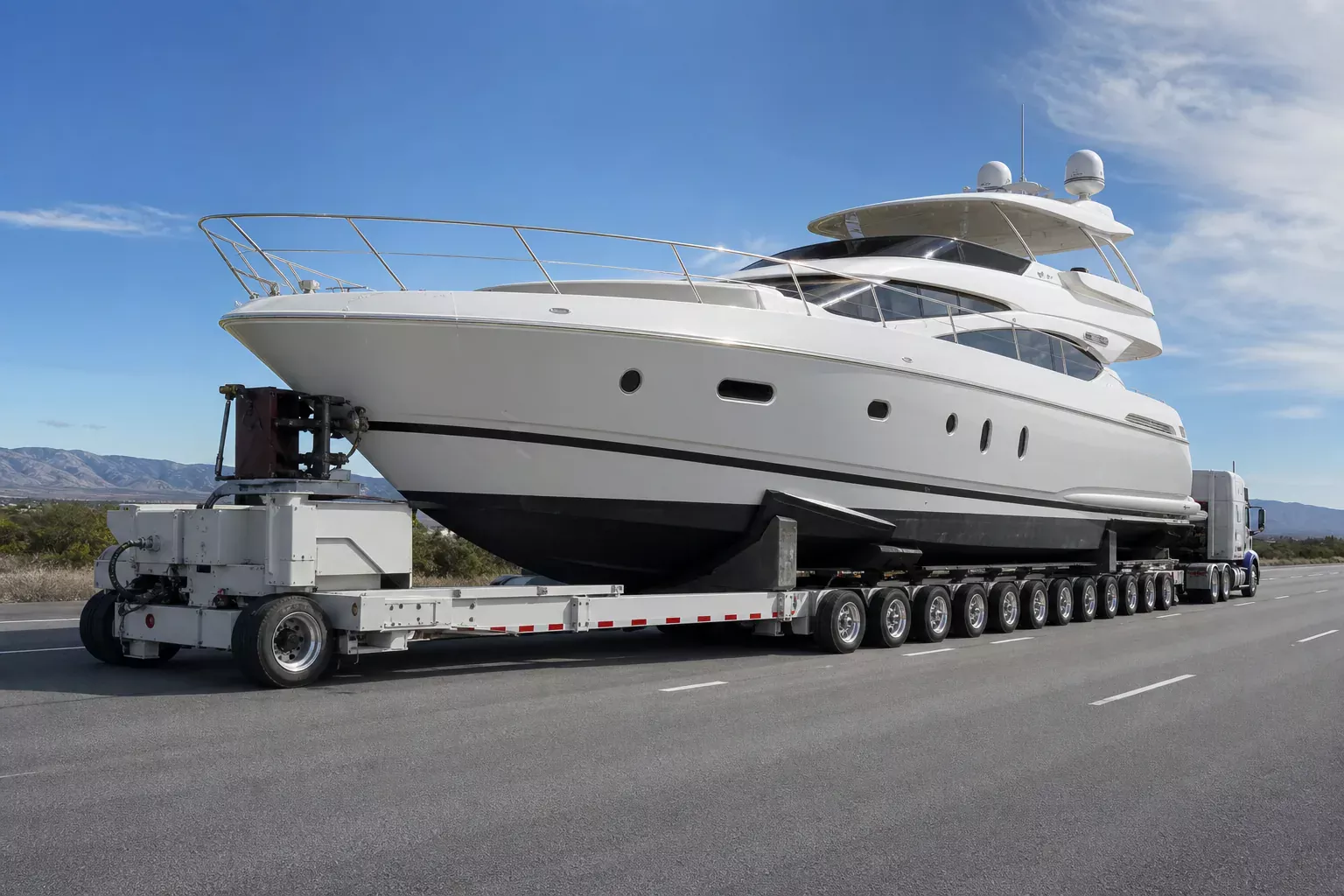
Boats that are not trailerable in the ordinary sense, including many yachts and deep-keel sailboats, usually ride on a specialized hydraulic or bunk trailer that can pick the hull up from a travelift, slings, or a cradle. That equipment is less common than a standard gooseneck and often has to be positioned from farther away.
Marina and yard fees
The trucking charge and the marina bill are separate lines, and both belong in your total. A marina-to-marina move can include haul-out, blocking, splash, travelift time, and yard labor to pull slings or a cradle. Those fees are set by the yard, not the broker, and they vary with boat size, how busy the yard is, and whether the lift is during normal hours. Our marina-to-marina boat transport Guide covers access, lift scheduling, and what to confirm with both yards.
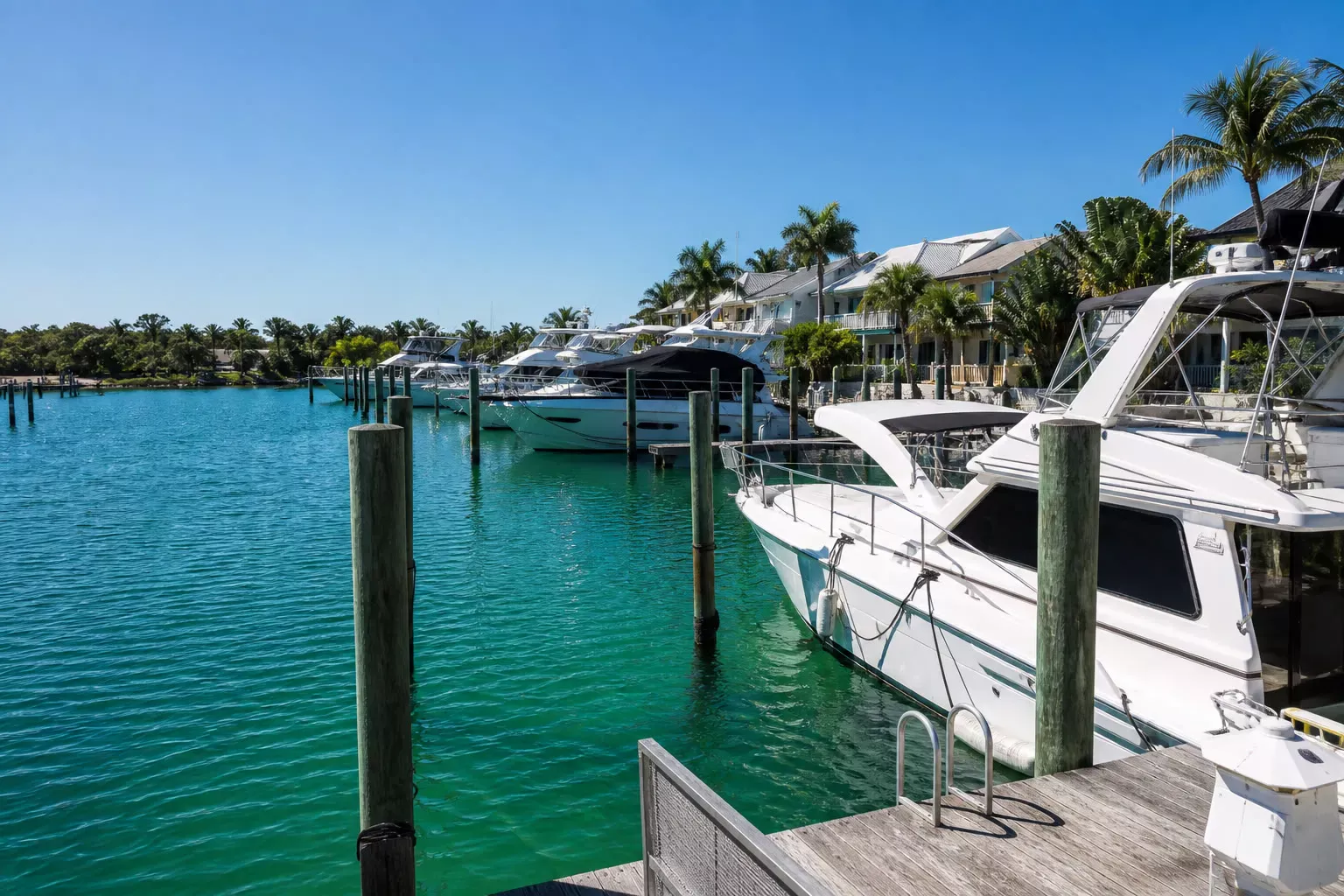
Tell us whether the boat is in the water, on jack stands, or already on a trailer. An unbooked travelift, or a yard that will not lift on the day the truck can arrive, is a common reason a pickup window slips.
Add-ons: Shrink Wrap, Mast Work, Insurance, and Season
- Shrink wrap. A transport-grade wrap is extra yard or wrapper labor, and it can add a little height. If the boat will be wrapped, measure height over the finished cover. See our Guide to boat shrink wrap for transport for film, vents, and pickup checks.
- Mast-down and tower work. Unstepping a mast, folding a T-top, or removing outriggers and a radar arch can keep the load under a height or width threshold. The yard’s labor is separate from the trucking quote, but it can avoid an overheight permit and escorts.
- Insurance documentation. Have a current condition record ready. Our boat transport insurance and inspection Guide covers pickup photos and the bill of lading.
- Season and demand. Snowbird season, holidays, and hurricane windows tighten capacity and the calendar for permitted daylight-only moves. If the boat is headed south for the winter, our boat transport to Florida Guide covers timing and marina arrival.
Prep work you do yourself also protects the quote. Loose canvas, full tanks, and gear left in lockers add weight and windage. Walk through our prep for haul checklist before pickup day.
What to Send With a Quote Request
A complete request lets us match equipment and permits on the first pass.
| What to send | Why it changes the quote |
|---|---|
| Type, make, model, and year | Tells us hull shape and typical equipment (keel, T-top, flybridge, pontoon decks). |
| LOA as it will travel | Sets trailer length and overhang, including platforms and engines that stay on. |
| Beam at the widest loaded point | Shows whether the load stays at or under the 8 ft 6 in legal-width line or needs overwidth permits. |
| Height to the highest fixed point | Determines overheight permits, bridge routing, and whether a top or mast should come off. |
| Weight, including engines and remaining fluids | Matches trailer capacity and flags a possible overweight permit. |
| How the boat sits now, and whether extras come off | Decides travelift vs trailer pickup, and can keep the load legal-height or legal-width. |
| Origin and destination with marina or yard names and ZIPs | Sets loaded miles, empty positioning, and last-mile access. |
| Dates, extra stops, and side, stern, and access photos | Affect permit lead time and confirm height, canvas, trailer condition, and access. |
When a measurement is uncertain, round up and add a photo. Correcting a number early is much easier than correcting it at the travelift.
Get a Boat Transport Quote
Boat Transport Near Me is operated by Logi Transports LLC in Sebastian, Florida (MC-1636889, USDOT 4230991). Send the measurements above, pickup and delivery locations, and how the boat sits today, and we will match you with a carrier for the haul. Call (864) 791-5644, email quotes@logitransports.com, or use our contact page.