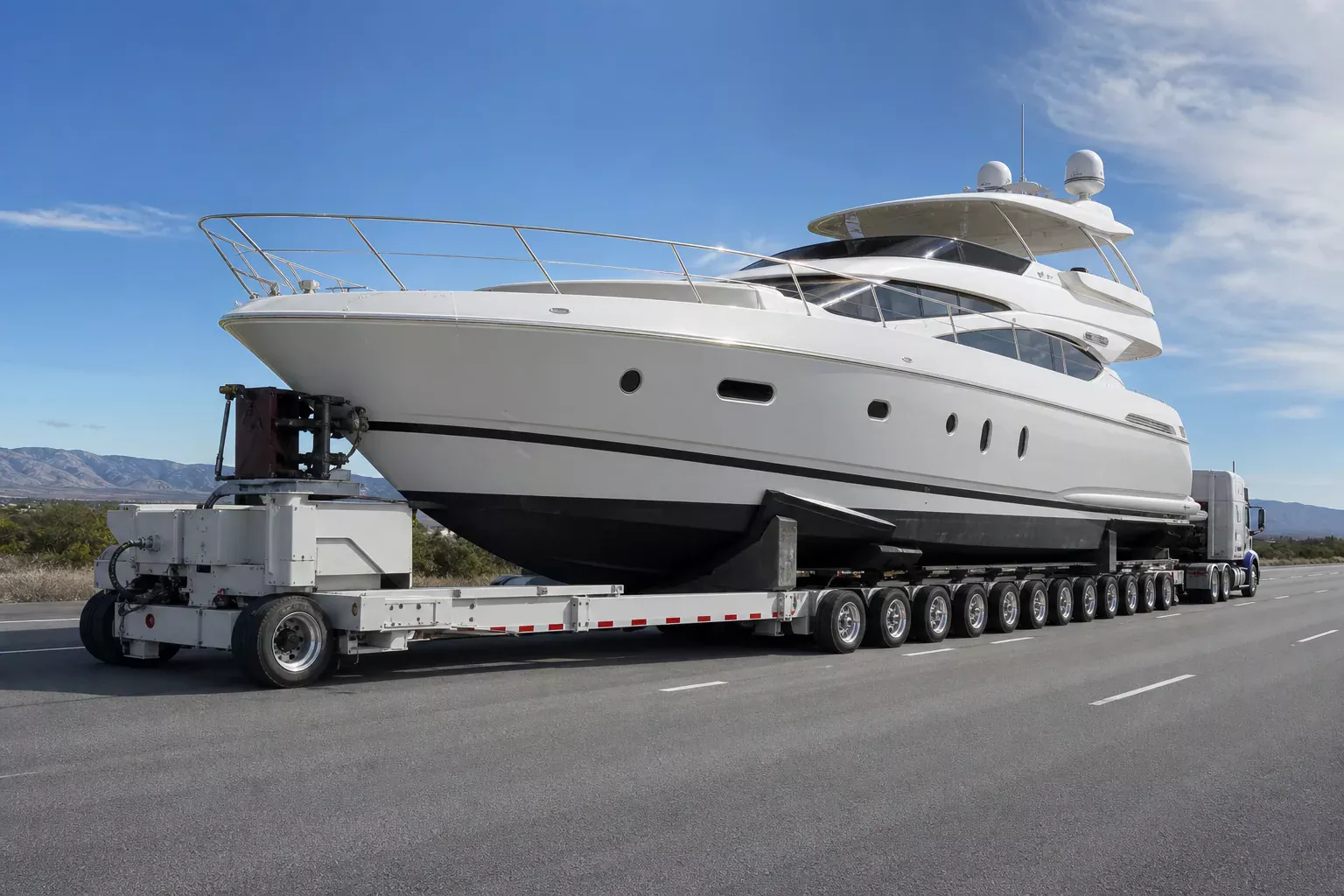

A practical guide for owners who need marina to marina boat transport—how haul-outs, dockmasters, and wet vs dry loading affect pickup, delivery, and timing when you search boat transport near me.
# Marina-to-Marina Boat Transport Near Me: Haul-Out, Dockmasters & Wet vs Dry Loading
Searching boat transport near me often starts with a zip code and a preferred pickup week. When both ends of the move are marinas, the real work is coordination: haul-out appointments, dockmaster authority, gate and crane access, and whether the boat will be loaded wet or dry. This guide explains how marina to marina boat transport actually works so you can brief both yards early and avoid a truck sitting idle while the boat is still in the water.
Boat Transport Near Me (Logi Transports LLC, MC-1636889, USDOT 4230991) plans nationwide recreational moves with clear marina contact chains. Phone 864-791-5644 · quotes@logitransports.com.
Why marina-to-marina moves differ from driveway pickups
A driveway or storage-yard pickup is mostly about truck access and trailer fit. A dockmaster boat haul adds a second clock: the marina’s lift schedule, tide windows where they matter, and yard rules about who may board, shift ballast, or stay near the straps during a travelift evolution.
Marina-to-marina shipping also means two sets of staff, two gate codes, and two preferred arrival windows. The carrier can only move as fast as the slower marina allows. Owners who treat each yard as a separate project—rather than assuming “the truck will figure it out”—get cleaner ETAs and fewer reschedules.
If you are still mapping service options by vessel type, start with our overview of boat transport and the coverage map, then come back to the marina logistics below.
Haul-out timing: match the lift to the truck, not the other way around
Haul-out is the handoff from water to land (or from water onto the transport trailer). For many mid-size powerboats and sailboats, that means a travelift or crane under dockmaster control. The common failure mode is booking the truck for “Tuesday morning” while the marina’s open lift slot is Tuesday afternoon—or worse, the following day after a holiday backlog.
Practical sequence that works for most marina to marina boat transport jobs:
- Confirm both marinas will accept a commercial truck and trailer on your target dates (height, turning radius, after-hours bans).
- Reserve haul-out (origin) and launch or blocking (destination) before you lock a hard truck day.
- Share dockmaster names, direct phones, and gate instructions with the carrier when you request pricing—not the night before pickup.
- Build a same-day buffer when tides, wind, or shared lift queues are unpredictable.
U.S. Coast Guard drydocking and haul-out specifications used in professional yards emphasize certified dockmaster oversight and known arrival load conditions before a lift—useful context for why yards insist on accurate weight, fuel, and list information ahead of time (USCG SFLC drydocking / haul-out standards.pdf)). Recreational owners do not need to read the full military standard, but the lesson transfers: the person running the straps needs true vessel condition data before the truck rolls in.
For equipment and personal-safety expectations while you are still aboard or near the lift, keep federal recreational-boat requirements in mind (U.S. Coast Guard Boating Safety).
Dockmasters: who holds authority on haul day
A dockmaster (or yard manager) typically controls:
- Lift appointment order and whether your boat can jump the queue
- Where the truck may stage without blocking travelifts, fuel docks, or fire lanes
- Whether loading happens from the water, from jack stands, or after a short yard move
- Who may sign condition notes and release the vessel
When you search dockmaster boat haul, you are really searching for a contact who can say yes to truck access and a lift window in the same conversation. Introduce the carrier early. Ask the dockmaster:
- Preferred truck arrival window relative to the lift
- Overhead clearance on the approach (trees, power lines, canopies)
- Soft ground, gravel, or weight limits for loaded trailers
- Whether the yard requires the owner or agent present for the strap-up
- Launch or blocking plan at the receiving marina so delivery is not “boat arrives, no slip ready”
Give Logi Transports the same names and numbers you give the yards. Split communication—owner tells one story to the marina, carrier hears another—is the fastest path to a missed lift fee.
Wet vs dry boat loading: what changes for owners
Wet loading means the boat is still afloat (or freshly lifted and immediately set onto the transport trailer) with water still part of the evolution. Typical when the marina can float the boat into a haul-out well, strap it, and land it on the carrier’s trailer in one continuous sequence.
Dry loading means the boat is already out of the water—on jack stands, a cradle, or an owner trailer—before the transport truck arrives. The yard may have hauled days earlier for bottom work, storage, or survey. The carrier then loads from land, often with less tide pressure but more need for clear yard space and a planned path from stands to trailer.
Wet vs dry at a glance
| Factor | Wet loading | Dry loading |
|---|---|---|
| Marina dependency | High — lift + water access same day | Medium — boat already ashore |
| Schedule risk | Tide, wind, shared travelift queues | Yard congestion, blocked aisles |
| Owner prep focus | Lines, fenders, bilge/livewell status, lift contacts | Blocking plan, aisle clearance, stand removal timing |
| Best for | Boats living in slips until move day | Post-haul storage, yard work, long lead moves |
Neither method is “safer” in the abstract. Wet loading fails when the lift slot slips and the truck cannot wait. Dry loading fails when stands sit in a corner the tractor-trailer cannot reach, or when the yard scheduled a launch for someone else in the same travelift hour you need for loading.
Tell the quote desk which condition the boat will be in on pickup day. That single detail shapes equipment, time on site, and whether a local yard move is required first. Vessel-type pages for powerboats and center consoles, sailboats, and yachts explain how size and configuration change trailer and cradle choices—pair those with the wet/dry note so the plan matches reality.
Industry groups such as the National Marine Manufacturers Association (NMMA) promote manufacturing and recreational-boating standards that yards and owners rely on for safe handling expectations; use them as a reference point when a marina cites manufacturer lift points or weight guidance.
What to tell both marinas before you book the truck
Use this short brief for origin and destination dockmasters (email works; a phone confirmation is better):
- Boat make/model, LOA, beam, and approximate weight
- Wet or dry status on the planned load day
- Transport company name and driver contact once assigned
- Preferred pickup/delivery date range and hard deadlines (closing, storage start, survey)
- Gate codes, truck height limits, and after-hours rules
- Who on site has authority to release or receive the boat
At the receiving marina, confirm slip, rack, or blocking is reserved before the truck leaves the origin. Marina-to-marina moves stall most often at delivery: the boat arrives, the travelift is booked solid, and overnight yard fees start ticking.
Near-me search vs nationwide marina corridors
“Boat transport near me” helps you find a coordinator who answers the phone and knows your region’s yards. Long marina-to-marina legs still cross state lines, permits, and overnight staging. Local familiarity matters for the first and last mile; corridor planning matters for everything between.
When you request pricing, include marina names—not just cities. A slip at a downtown yacht club with tight turns is a different job than an open-water boatyard with a dedicated haul-out basin. Photos of the approach and the boat’s current setup (in slip vs on stands) cut back-and-forth.
For a complete pricing package, follow how to get a boat quote. For the owner/yard checklist once dates are set, use prep for haul—that page covers gear, fluids, and access details this guide intentionally skips so you are not reading the same checklist twice.
Day-of rhythm that keeps dockmasters and drivers aligned
A workable marina-to-marina day usually looks like this:
- Night before: Confirm lift time, gate code, and authorized contact with both yards and the carrier.
- Morning of pickup: Owner or agent on site (or reachable). Boat ready per yard rules. Truck staged where the dockmaster directed—not blocking the fuel dock.
- During load: Dockmaster runs the lift evolution; driver runs the trailer and highway securing. Stay clear of straps and lift paths.
- Before the truck leaves: Condition notes signed; destination marina reconfirmed for ETA and launch/blocking slot.
- Delivery day: Same discipline in reverse—truck arrives in the agreed window; receiving dockmaster owns the launch or set-down.
If weather or a medical emergency forces a scrub, call the dockmaster and the carrier in the same hour. Partial notifications create no-show fees on both sides.
Request marina-to-marina pricing
Have origin and destination marina names, wet vs dry status, LOA/beam/height, and preferred windows ready. Logi Transports LLC will use those details to plan equipment and marina coordination for your move.
Request a quote · Call 864-791-5644 · quotes@logitransports.com
Logi Transports LLC · MC-1636889 · USDOT 4230991 · Boat Transport Near Me — boattransportnearme.com