
A practical guide for owners comparing trailerable vs yacht boat transport—how beam, height, trailer fit, and permits decide whether a simple tow or a specialized haul fits when you search boat transport near me.
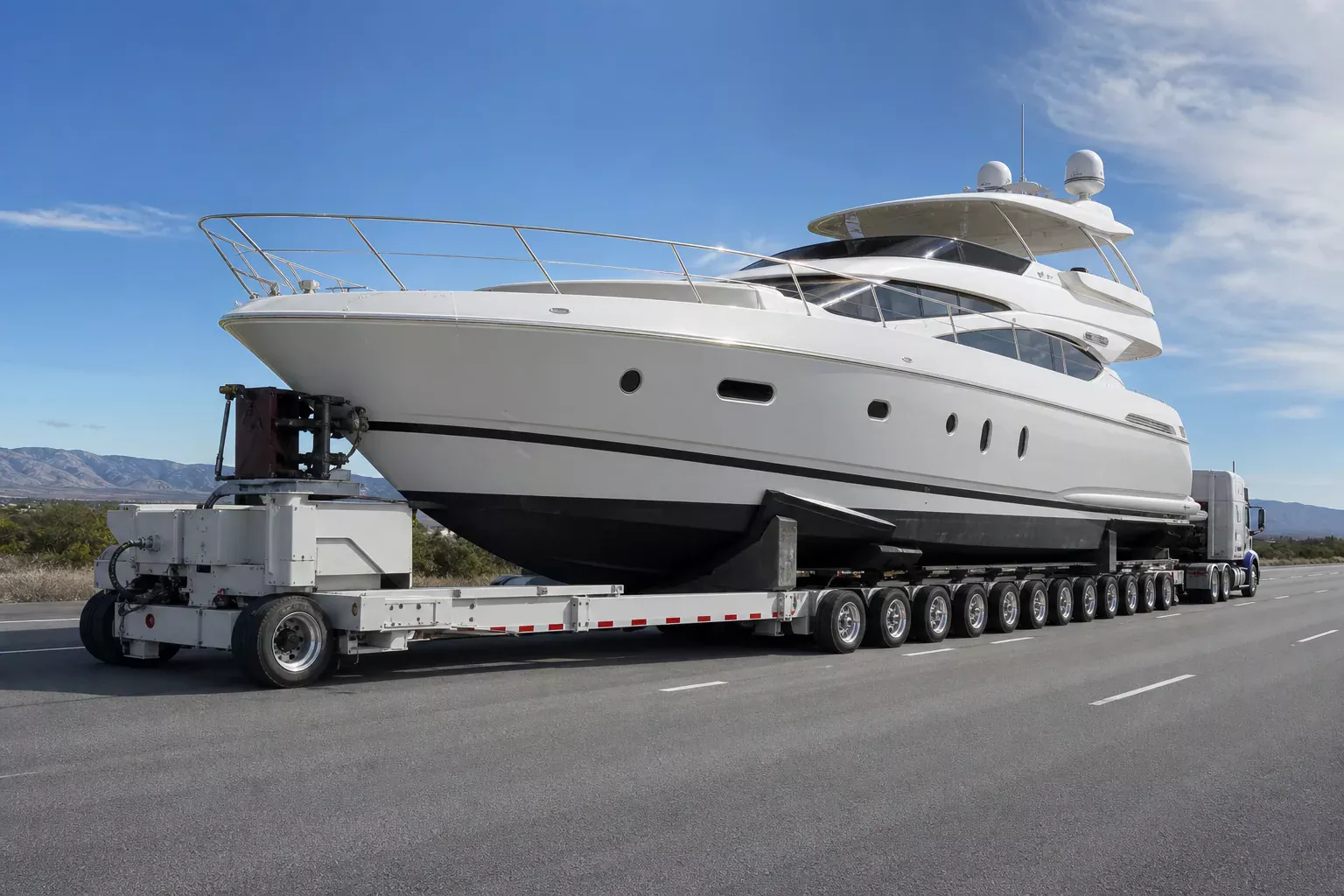
Searching boat transport near me usually starts with a ZIP code and a preferred week. The question that actually shapes equipment and price is simpler: is the boat already a legal highway package on its own trailer, or does it need a specialized cradle, lowboy, or commercial boat transporter? That split—trailerable boat transport versus a yacht or non-trailerable haul—drives permits, marina coordination, and how long the move takes.
Boat Transport Near Me (Logi Transports LLC, MC-1636889, USDOT 4230991) plans nationwide recreational moves with clear dimension checks before dispatch. Phone 864-791-5644 · quotes@logitransports.com.
What “trailerable” really means on the highway
A trailerable boat is one that can travel as a complete, road-legal unit: hull on a suitable trailer, lights and brakes working, and overall width and height inside the limits of every state on the route. Many bay boats, dual consoles, and smaller center consoles fit this pattern when the owner trailer is sound.
“Yacht” in everyday shipping talk is less about luxury branding and more about scale. Once beam, hardtop height, or keel/cradle needs push past ordinary tow limits—or the boat has no roadworthy trailer—you are in specialized haul territory. That is still recreational boat transport; it simply needs different equipment and calendar room.
If you are still mapping vessel types, see our pages for powerboats and center consoles, sailboats, and yachts, then return here for the dimension decision.
The three measurements that change the plan
Quote desks ask for LOA, beam, and height for a reason. Manufacturer brochure numbers are a start; loaded highway numbers are what matter.
- Length overall (LOA) — hull length, plus swim platforms or pulpits you will leave installed. Affects trailer choice and overhang.
- Beam — widest point of the loaded boat-and-trailer assembly, not only the waterline beam. Guideposts, fenders left on, and bunk extensions count.
- Height on trailer or cradle — ground to the highest point you will leave up: T-top, radar arch, antenna base, or mast step area. Round up and send a photo.
On the National Network, federal rules set commercial vehicle width at 102 inches (8 feet 6 inches); states cannot set a different National Network width limit (Hawaii is a special case). There is no federal height limit; state height standards commonly fall between about 13 feet 6 inches and 14 feet 6 inches. See the Federal Highway Administration overview of commercial vehicle size and weight standards. Anything over those state ceilings—or over legal width—usually needs oversize permits and may face daylight-only or escort rules.
Federal rules also treat boat transporters as specialized equipment. On the National Network, states may not impose overall length limits below 65 feet for traditional boat transporters (and truck-trailer boat transporters) or below 75 feet for stinger-steered boat transporters, exclusive of front and rear overhang allowances. Details live in 23 CFR § 658.13. Owners do not need to memorize the regulation; carriers do. Your job is to give true dimensions so the right equipment and permits are priced up front.
Trailerable boat transport: when the owner trailer can go
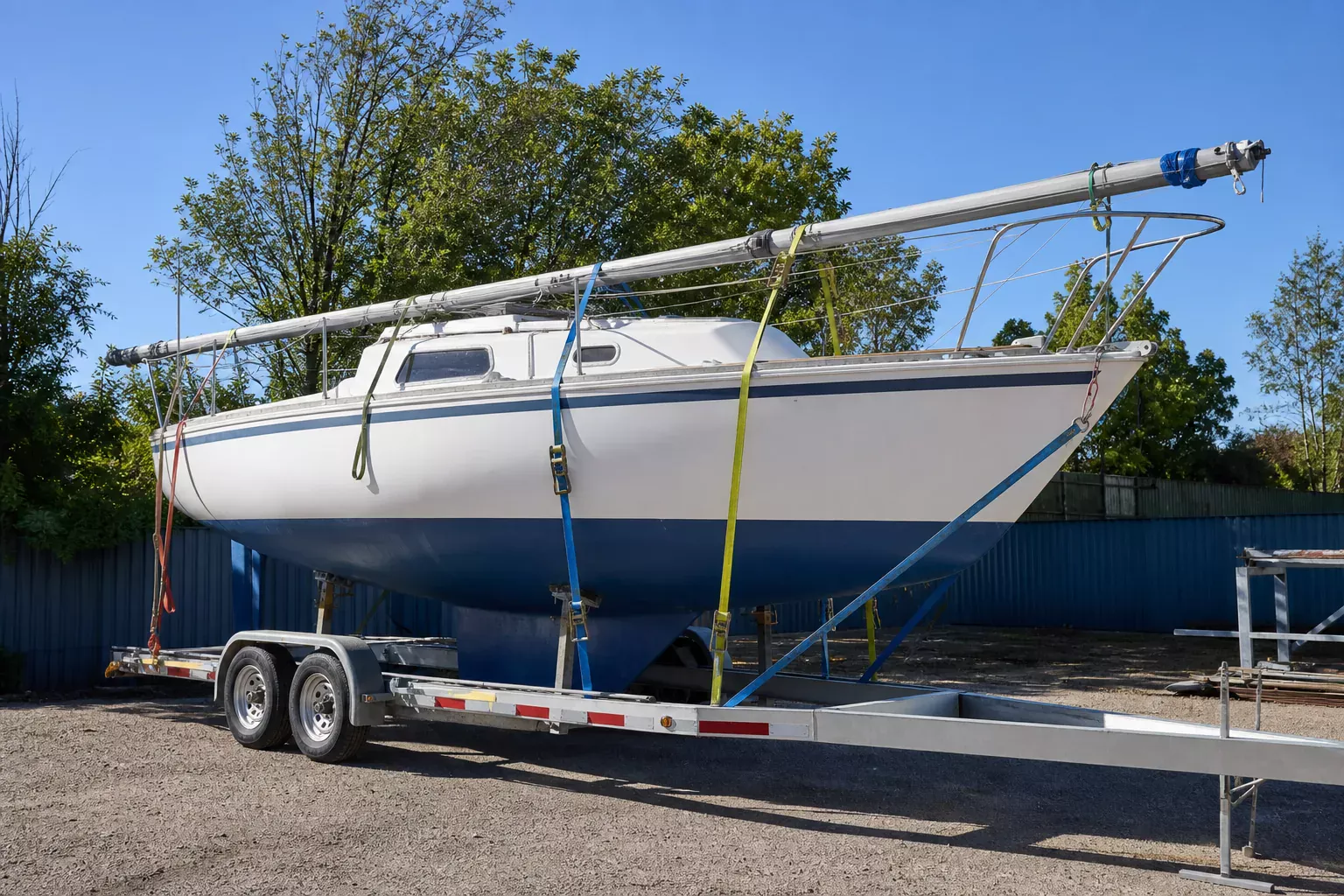
The simplest commercial move is power-only or tow of a boat already on a roadworthy trailer: hitch, inspect, and go. That path works when:
- Tires, lights, brakes, and winch are serviceable for highway miles
- Loaded width stays within legal limits for every state on the corridor
- Loaded height clears bridges and overpasses on the planned route
- Pickup and delivery allow a truck to hitch without a yard move first
Trailerable does not mean “no planning.” Soft lots, gated communities, and marina ramps that ban commercial trucks still break a schedule. Share access notes with the quote—the same discipline we ask for on how to get a boat quote.
Small single-axle trailers that feel fine for a weekend lake trip can be a poor choice for a multi-day interstate run. In those cases, a carrier may recommend deck-loading the boat (and sometimes its trailer) onto larger equipment. That is still trailerable-class cargo in spirit, but it is no longer a simple hitch-and-go.
Non-trailerable and yacht hauls: cradle, lowboy, and yard lifts
When the boat lives in a slip, sits on jack stands, or exceeds ordinary tow dimensions, expect a specialized plan:
- Travelift or crane at origin and often at destination
- Commercial boat trailer, bunk trailer, or lowboy/cradle setup matched to hull support points
- Permit lead time when beam or height is oversize
- Dockmaster coordination for gate codes, staging, and lift windows
Marina-to-marina logistics—wet vs dry loading, haul-out timing, and dockmaster authority—are covered in our Guide on marina-to-marina boat transport. This article focuses on the equipment decision those marinas feed into.
Industry manufacturing and handling expectations from groups such as the National Marine Manufacturers Association (NMMA) are useful when a yard cites lift points, trailer certification, or weight guidance. Pair that with federal recreational-boating safety habits from the U.S. Coast Guard’s Boating Safety resources whenever people are near straps, travelifts, or open water during load-out.
Side-by-side: trailerable vs specialized yacht haul
| Factor | Trailerable (owner or road-legal trailer) | Specialized / yacht-class haul |
|---|---|---|
| Typical equipment | Hitch to existing trailer; sometimes deck-load | Commercial boat trailer, cradle, or lowboy |
| Marina dependency | Lower if already on trailer ashore | Higher — lift, blocking, dockmaster windows |
| Permit likelihood | Lower if under 8’6″ width and state height | Higher when beam/height exceed legal limits |
| Owner prep focus | Trailer roadworthiness, gear, access | Lift contacts, cradle fit, mast/tower decisions |
| Calendar risk | Mostly truck assignment and weather | Permits + lift slots + truck in the same window |
Neither path is “better.” The wrong path is pretending a 10-foot beam yacht is a weekend tow, or overbuilding a 22-foot bay boat that already sits legal on a solid dual-axle trailer.
How oversize permits enter the quote
FHWA does not issue oversize permits; each state does. Multi-state boat moves need permits (and sometimes escorts) from every jurisdiction that considers the load oversize. FHWA publishes a directory of state oversize/overweight permit contacts so shippers and carriers can see who issues what. In practice, your carrier builds the permit package—but only after you supply honest beam and height.
What owners feel as “the quote went up” is often:
- Extra days for permit turnaround
- Restricted travel hours
- Pilot cars on certain widths
- Route detours around low bridges or construction
Tell the desk early if antennas, outriggers, or a T-top can come down. Shaving six inches of height can drop a permit tier; leaving them up because “we’ll see” creates a day-of surprise.
Sailboats: the mast makes the category
Many keelboats are “trailerable” only after the mast is unstepped. Stepped-mast highway moves are rare and height-prohibitive. Unstepping, boom packaging, and cradle fit are yard jobs that must finish before the truck’s hard appointment—see our sailboat transport page and the owner checklist on prep for haul.
Fin, wing, full, and swing keels change how the hull sits on a trailer or cradle. Draft in the water is not the same as support geometry on land. Send keel type with the quote request so equipment is not guessed.
Near-me search vs corridor reality
“Boat transport near me” helps you find a coordinator who answers and knows regional yards. Trailerable regional hops and coast-to-coast yacht hauls both still need corridor planning: driver hours, weather, and permit states. Local familiarity matters for the first and last mile; dimension honesty matters for everything between. Coverage notes live on our coverage page; service overview on boat transport.
When you request pricing, say which category you believe you are in—and why. Photos of the boat on its trailer or cradle, plus a side shot showing the highest installed gear, prevent most wrong-equipment quotes. Common questions are on the FAQ.
Quick decision checklist before you call
- Is the boat on a roadworthy trailer today, or in the water / on stands?
- Measured beam of the loaded package (not brochure beam alone)?
- Measured height from ground to highest point that will stay installed?
- Can towers, antennas, or canvas come down without a yard project?
- For sailboats: mast stepped or unstepped on the planned load day?
- Origin and destination access for a commercial truck and trailer?
If three or more answers point to specialized equipment, budget for a yacht-class plan even if the boat is “only” 30 feet. Length alone rarely decides the haul; width and height do.
Request a trailerable or yacht-haul quote
Have LOA, beam, height, trailer or cradle status, origin and destination, and preferred windows ready. Logi Transports LLC will match equipment and permits to the real load—not a hopeful brochure number.
How to get a boat quote · Call 864-791-5644 · quotes@logitransports.com · Contact
Logi Transports LLC · MC-1636889 · USDOT 4230991 · Boat Transport Near Me — boattransportnearme.com