

Boat shrink wrap for transport is not the same job as wrapping a boat for winter storage. A storage cover sits still in a yard for months. A transport cover has to survive hours of highway wind, road grit, and rain while your boat rides on a trailer or hydraulic rig. If you are lining up a fall or winter haul, this Guide from Boat Transport Near Me (Logi Transports LLC, Sebastian, FL) explains how to ask for a wrap that will hold at speed, how to vent it, what it changes about your quote, and what to do with the plastic when the boat arrives.
Shrink wrap is optional for most moves. Plenty of boats travel uncovered after a careful prep. But for long hauls, winter routes, salted roads, or boats with open cockpits and interior cushions, a properly built transport wrap can save you a lot of cleanup and chafe repair at delivery.
Storage Wrap vs Transport Wrap: Why the Difference Matters
The plastic is the same family of material, low-density polyethylene film, but the way it is built and installed changes when the boat is going to move.
Film thickness
Shrink wrap is sold by thickness in mils (one mil is one thousandth of an inch). The retailer guide from Boat Outfitters on boat shrink wrap lays out the general rule of thumb:
- 6 mil is the thinnest wrap recommended for boats and is meant for storage only, not transport.
- 7 mil is the typical thickness for small and mid-sized boats in storage, but it should not be used if the boat will be trailered long distances at highway speeds.
- 8 mil suits larger boats, boats with sharp protrusions, and boats that will be transported at highway speeds.
- 12 mil is the heaviest common grade and is available with flame-retardant properties.
In plain terms: if your boat is going on a truck for more than a short local hop, ask your wrapper for transport-grade film, and say the word “transport” before they start cutting.
Shape and strapping
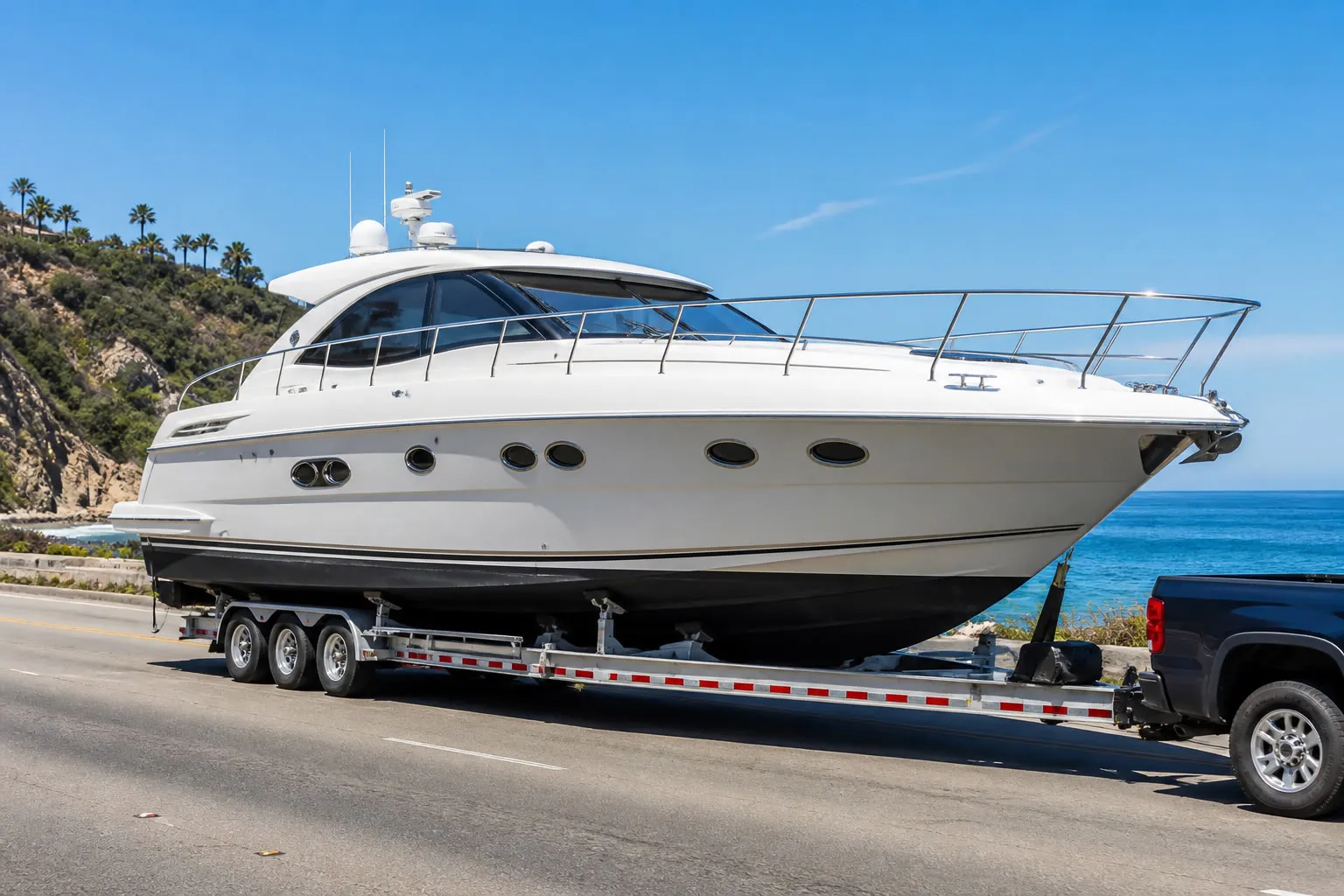
A winter storage wrap is usually built over a tall ridge frame so snow and rain slide off. That tall tent shape is exactly what you do not want at highway speed, because it catches wind like a sail. The boating site boats.com, in its guide Should I Shrink Wrap My Boat?, notes that a boat towed while wrapped needs a “bullet wrap,” an aerodynamic design that uses strapping and thicker plastic to handle towing wind, and that you should tell your shrink wrapper up front that the boat will be towed.
Practically, a good transport wrap:
- Sits low and tight, following the deck and cabin profile instead of tenting high above it.
- Uses a perimeter band or strapping that is drawn tight below the rub rail so the bottom edge cannot lift.
- Has padding over sharp points such as windshield corners, bow rails, cleats, antenna bases, and rocket launchers, so the film does not wear through.
- Has no loose flaps, tails, or tape ends that can start a tear at speed.
Venting a Transport Wrap
Shrink wrap does not breathe. Any moisture trapped under it, from a wet bilge, damp cushions, or dew on the deck, has nowhere to go. Over a multi-day haul through changing temperatures, that can mean condensation and mildew by the time the boat is unloaded.
Wrap supplier Dr. Shrink publishes a vent installation and venting chart that is written for winter storage covers. It is still a useful baseline for how many vents a boat of your size usually gets:
| Boat length | Suggested vents | Typical locations |
|---|---|---|
| Up to 18 ft | 3 | Two behind the windshield, one at the rear of the cockpit |
| 19 to 24 ft | 4 | Two at the rear of the cockpit, two forward of the windshield |
| 25 to 32 ft | 6 | Two at the rear of the cockpit, two amidships, two near the bow |
| 33 to 42 ft | 8 | Two at the rear of the cockpit, two on the flybridge, two amidships, two near the bow |
| 43 ft and up | 8 to 12 | Same as above, with extras along the sides |
The same sheet says the cover should be fully shrunk before vents go in, and that it is better to over-ventilate than under-ventilate. For a road move, ask your wrapper to use low-profile vents that face aft or sit on a vertical surface, so they are less likely to scoop wind and rain. Check them at pickup; a vent that has popped loose is an open hole in the cover.
Prep the Boat Before Anyone Wraps It
A wrap seals in whatever condition the boat is in. A few steps before the wrapper arrives make the difference between a clean delivery and a musty one.
- Dry it out. In the boats.com guide, a Dr. Shrink sales manager names moisture accumulation as the number one problem with shrink-wrapped boats, and points to damp PFDs as a common source. Pull gear out of lockers, let everything dry, and remove the drain plug so the bilge can empty. Desiccant bags inside the cabin can help.
- Clear out food and bait. The same guide recommends removing food wrappers, bait cups, and anything that might attract rodents.
- Remove what can come off. Biminis, canvas, flags, antennas, and loose electronics are better stowed below or shipped separately. Our prep for haul checklist covers the full list of items to secure.
- Lower what can fold. Fold-down T-tops, radar arches, and windshields can change your overall height. If your boat has a tower, see our notes on center console T-tops and outriggers and yacht flybridges and radar arches before you wrap over them.
- Photograph the boat first. Once it is wrapped, nobody can see the gelcoat. Take dated photos of every side, the deck, and any existing scratches before the film goes on. That record pairs with the pickup inspection explained in our boat transport insurance and inspection Guide.
How Shrink Wrap Affects Your Boat Transport Quote
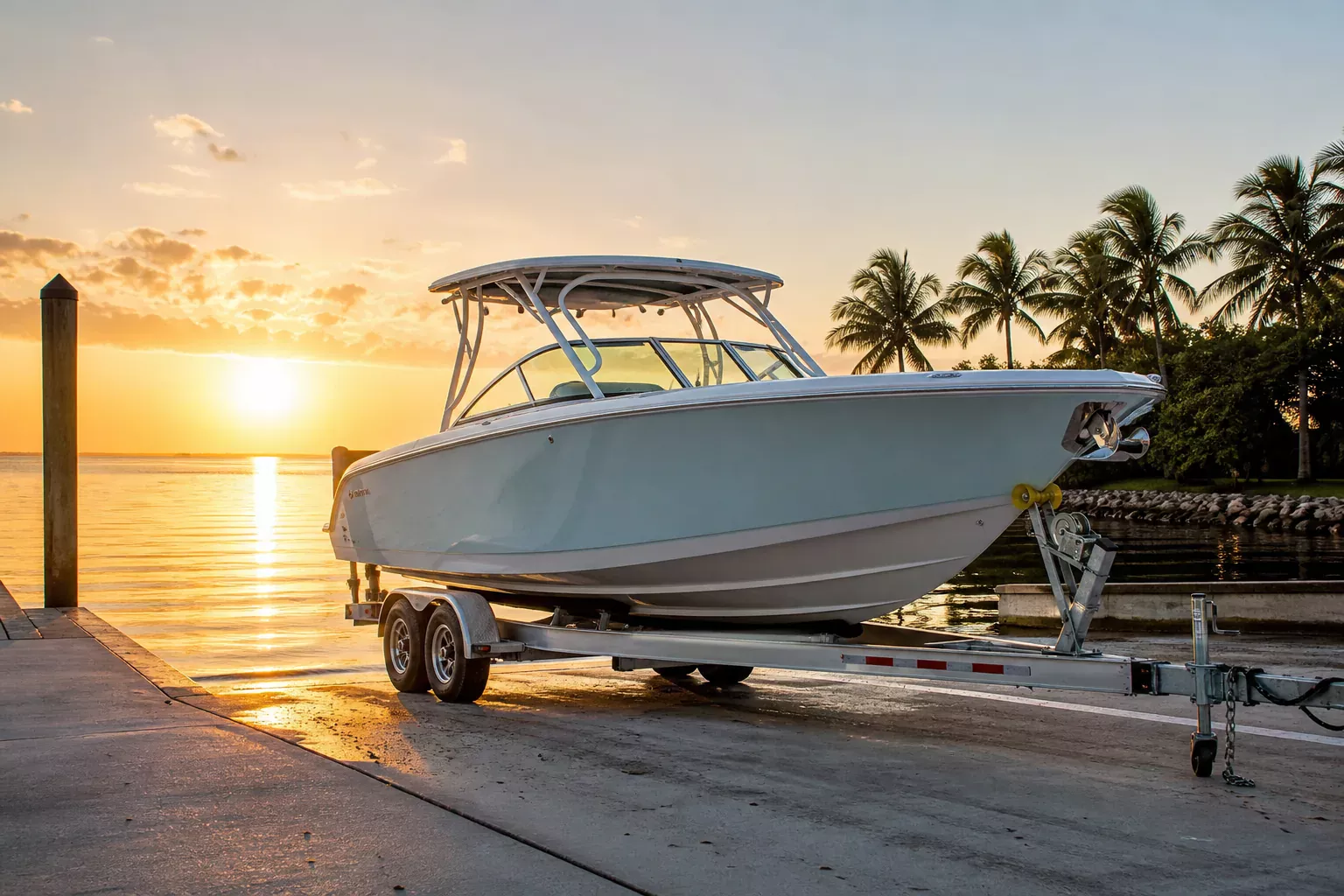
When you request a quote, tell us whether the boat will be wrapped and who is doing it. It affects a few things on our side:
- Height and width. Wrap and padding can add a little to the overall dimensions, especially over a windshield or hardtop. If your boat is already close to a height or width threshold, give us the measurement taken over the finished wrap, not the bare boat. Our page on trailerable vs yacht dimensions explains why a few inches can change the trailer and route.
- Timing. If a marina or mobile wrapper is doing the job, the boat needs to be wrapped and the plastic cooled before the truck arrives. Build that into your pickup window so the driver is not waiting.
- Inspection. The driver still has to inspect the boat at pickup. Ask your wrapper to install a zippered access door so the cabin or cockpit can be checked without cutting the cover.
- Damage notes. If the cover tears in transit, document it at delivery the same way you would any other condition note, with photos and a line on the bill of lading.
The fastest way to get an accurate number is our how to get a boat quote page. Note “shrink wrapped for transport” and your over-wrap height in the details.
Wrap Checklist at Pickup
Walk around the boat with the driver before it leaves and confirm:
- The film is tight with no loose flaps, tails, or lifting edges.
- The bottom band or strapping is secure below the rub rail all the way around.
- Sharp points (bow rail ends, windshield corners, cleats) are padded and the film is not already scuffed thin there.
- Vents are fully seated and closed.
- The access door zipper is closed and taped or secured.
- Any tie-down straps from the carrier sit on padding or the hull, not on unsupported film that could tear.
- You have photos of the wrapped boat from all four sides.
At Delivery: Unwrapping and Recycling
When the boat arrives, inspect the wrap first. A cover that is intact is a good sign; any tear or puncture is worth photographing before the plastic comes off, because it shows where the boat may have been exposed. Then remove the wrap and do your hull and deck walk-around.
Do not just throw the film in a dumpster if you can avoid it. The BoatUS Foundation disposal guide notes that shrink wrap is not biodegradable, that many marinas run bulk recycling programs, and that mail-back recycling bags are available for a nominal fee. Some states go further: the Minnesota Pollution Control Agency describes the country’s first boat wrap stewardship program, Wrap Recycle Right, whose guidelines say wrap must be clean, with vents, zippers, strapping, and wood supports removed, before it is accepted for recycling. Recycling programs in other states ask for the same kind of clean, strap-free wrap.
If your boat is heading south for the season, our boat transport to Florida Guide covers snowbird timing and marina arrival. Many owners shipping south will not need the wrap once the boat is in warm water, so plan to recycle it at the receiving marina.
When You Can Skip the Wrap
Shrink wrap is a tool, not a requirement. A short local move in good weather, a boat with a fitted, well-secured travel cover, or an open boat with nothing inside to protect may not need it. What matters most is that nothing on the boat can loosen, flap, or blow off. If you use a canvas cover instead, it has to fit tightly and be strapped so it cannot billow. When in doubt, ask us during quoting and we will tell you what the carrier needs for your boat and route.
For boat types with their own quirks, see our pages for powerboats and center consoles, sailboats, and yachts.
Get a Boat Transport Quote
Boat Transport Near Me is operated by Logi Transports LLC in Sebastian, Florida (MC-1636889, USDOT 4230991). Tell us your boat’s make, length, beam, over-wrap height, pickup and delivery locations, and whether it will be shrink wrapped, and we will match you with a carrier set up for your haul. Call (864) 791-5644, email quotes@logitransports.com, or use our contact page. You can also check our coverage area.