
Jet ski transport looks simple on paper: a personal watercraft (PWC) is small, light compared with a cruiser, and usually already sits on its own trailer. In practice, the moves that go wrong are the small ones. A strap rubs through the gelcoat, a trailer bearing that sat all summer fails on the interstate, or the paperwork doesn’t match the hull at delivery. This Guide from Boat Transport Near Me (Logi Transports LLC, Sebastian, FL) explains the ways a jet ski or other PWC can be shipped, how to prep it, and what to send so a broker can quote a jet ski transport near you without guesswork.
Three Ways a Jet Ski or PWC Gets Shipped
Before anyone can price the move, you need to decide how the watercraft will ride. Most PWC shipments fall into one of three setups, and each one changes the equipment and the prep.
1. On its own trailer
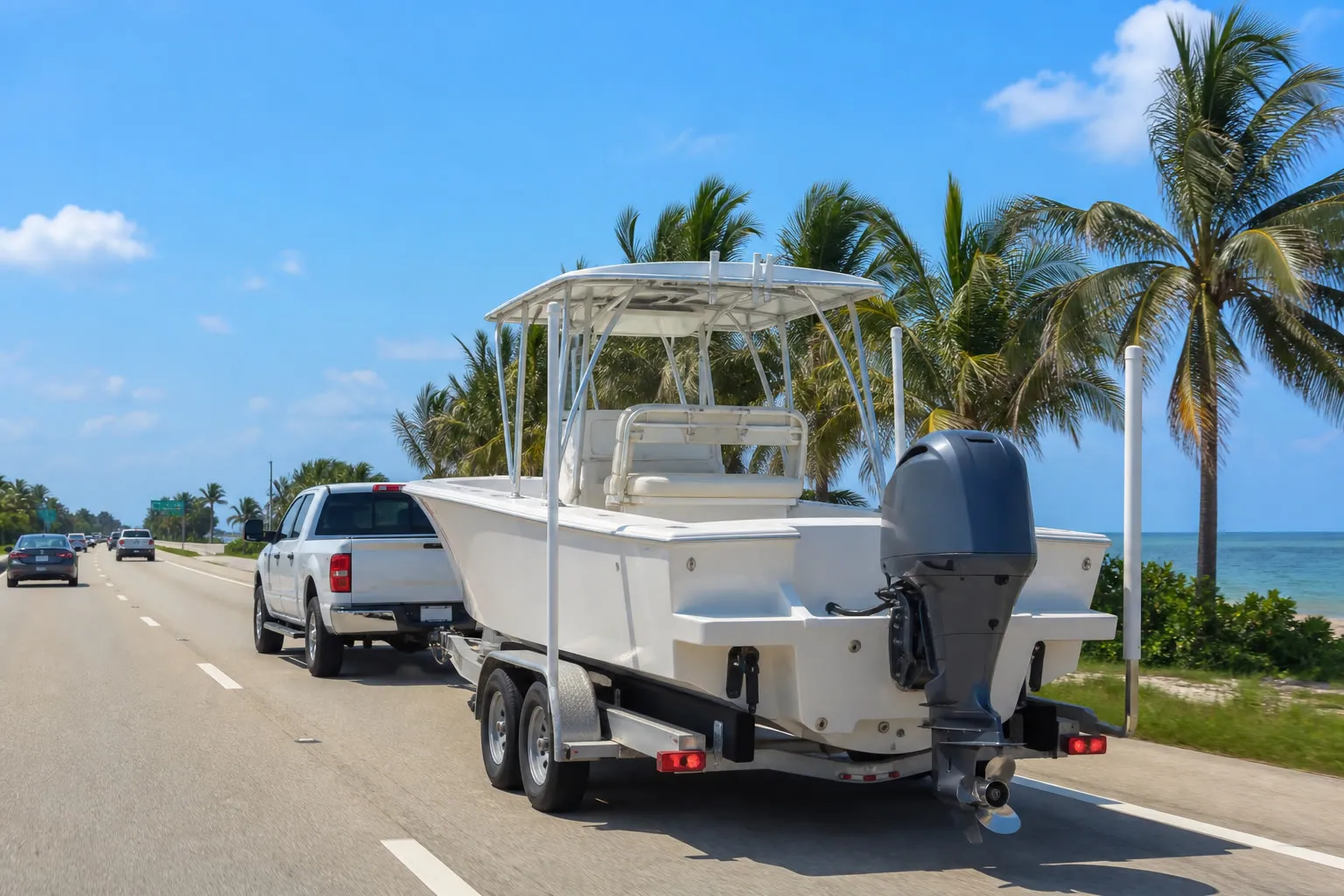
The most common request is a single or double PWC on the owner’s trailer. Depending on the lane and the carrier, the trailer may be towed by a pickup or loaded onto a larger deck with other cargo. Either way, the trailer itself becomes part of the shipment, so its tires, bearings, lights, and coupler matter as much as the watercraft. A trailer that hasn’t rolled in a year is the single biggest risk on these moves.
2. Off the trailer, on a deck or in an enclosed unit
If you are selling the trailer, buying a watercraft without one, or the trailer isn’t roadworthy, the PWC can ride on a padded cradle, stand, or dolly secured to a flatbed or inside an enclosed trailer. This needs a way to load and unload at both ends, such as a forklift with padded forks, a lift at a dealer or boatyard, or a crew that can hand-load a lighter model. Say up front if neither end has equipment.
3. New units from a dealer or crate
New watercraft often move between dealers or from a distributor still in shipping crates or on stands. These are handled more like freight. The questions are crate dimensions, total weight, and whether the dock has a forklift. If you are a dealer moving several units, send the count and crate size so the carrier can plan deck space.
Prep Checklist Before Pickup
Prep for a PWC is lighter than for a cabin boat, but it’s still worth doing on purpose. Use this as a working list and compare it with our general prep for haul page, which covers the steps common to every vessel.
| Item | What to do | Why it matters |
|---|---|---|
| Bow and stern tie-downs | Winch strap snug to the bow eye, plus a separate bow line or chain and transom straps at the stern | The BoatUS Foundation says winches are for loading and unloading, not for holding a boat on the trailer down the road |
| Strap contact points | Pad any spot where a strap touches the hull or seat edge | PWC hulls and seat covers scuff and tear under road vibration |
| Loose gear | Remove tow ropes, PFDs, docking lines, and anything in storage bins that can shift | Loose items can be lost or rattle against the hull, and they aren’t part of the shipment |
| Seat, hatch, and fuel cap | Latch everything, and ask the carrier what fuel level they want | An open seat or hatch can lift at highway speed |
| Cover | Use only a snug, trailerable cover, or ride uncovered | A loose cover flaps and can wear through finish over long miles |
| Trailer tires and bearings | Check tire pressure and condition, spin the hubs, and grease bearings that need it | Bearings that sat or were dunked are a common roadside failure |
| Trailer lights and coupler | Test lights, confirm the coupler and safety chains are in good shape | The trailer must be road-legal if it is towed |
| Photos and notes | Take date-stamped photos of all sides, the hull bottom if visible, and any existing scratches | This is your baseline for the condition report at pickup |
Tie-downs: the winch is not enough
This is the most common prep mistake. The BoatUS Foundation’s trailering guide says a heavy strap should always anchor the stern to the trailer, because without one the boat will bounce against or off the trailer. It also says not to rely only on the winch cable at the bow and to run a separate line from the bow eye down to the trailer. The professional driver will set their own securement, but if your trailer has worn straps, a cracked bow stop, or missing stern eyes, tell the broker before pickup so the right gear shows up.
Trailer hubs and bearings
The same BoatUS Foundation page notes that hubs dunked while hot can draw in cold water, which displaces grease and can corrode bearings. It also recommends carrying extra bearings on a long trip. For a shipper, the practical point is this: if your PWC trailer launches in salt water every weekend, have the bearings looked at before a long-distance haul. A failed bearing delays the whole truck, not just your watercraft.
Paperwork for Jet Ski Shipping
Carriers and receiving dealers want the paperwork to match the unit. Before pickup, have these ready:
- Proof of ownership or authority to ship: title, registration, or a bill of sale if you just bought it. If a dealer or seller is releasing the unit, they need written permission to hand it to the driver.
- Hull identification number (HIN): the HIN on the hull should match what is on your paperwork and the bill of lading.
- Trailer registration: if the PWC ships on its trailer, the trailer’s plate and registration should be current for road travel.
- Contacts at both ends: name and phone for whoever will release and receive the unit if you can’t be there.
Moving a PWC to Florida
Florida is one of the most common destinations we see. According to the Florida Department of Highway Safety and Motor Vehicles, all motorized vessels operating on Florida waters, including personal watercraft, must be registered and titled, and they must display Florida registration numbers, the HIN, and a valid decal. Titles and registrations are handled at a county tax collector or license plate agent office. The Florida Fish and Wildlife Conservation Commission’s boating regulations add that vessels must be registered and numbered within 30 days of purchase, and they list PWC operating rules (for example, a minimum operator age of 14) that new owners should read before launching. If you are moving south for the season with a larger boat too, see our boat transport to Florida Guide.
Pickup Day: Inspection and Bill of Lading
At pickup, the driver inspects the PWC and trailer and notes existing damage on the bill of lading. Walk around with them. Point out chips, scuffs on the hull or sponsons, seat tears, and anything about the trailer they should know, like a sticky jack or a light that works only sometimes. Sign only after the notes match what you see, and keep your copy. Do the same walk-around at delivery before you sign. Our boat transport insurance and inspection Guide explains how the condition report ties into coverage and claims.
Access at both ends
A PWC trailer is small, but the truck hauling it may not be. Tell us about gated communities, HOA truck rules, tight cul-de-sacs, low branches, or a marina with set receiving hours. If the watercraft is in the water at pickup, plan to have it on the trailer, or arrange a lift with the marina, before the driver arrives. Waiting time at a ramp is rarely part of a jet ski quote.
What Affects a Jet Ski Transport Quote
We don’t publish a flat jet ski price, because the same watercraft can ship very differently depending on the lane and the setup. The main factors are:
- Miles and lane: busy corridors usually have more trucks heading your way, so pricing can be better than on a remote rural pickup.
- Ride setup: on its own trailer, off-trailer on a deck, enclosed, or crated freight.
- Unit count: a double trailer with two skis, or several dealer units, is planned as one load.
- Trailer condition: a trailer that needs tires or bearings before it can roll adds time or a different plan.
- Timing: a flexible pickup window gives the broker more carrier options than a single fixed day.
- Loading equipment: forklift, lift, or ramp access at each end, if the unit isn’t rolling on a trailer.
For the bigger picture on how hauls are priced, read boat transport cost: what drives your haul quote. If your PWC is riding along with a larger boat, such as a center console that carries a ski on a lift, see our powerboats and center consoles page.
What to Send for a Fast PWC Quote
A complete request gets a usable answer faster. Send:
- Make, model, and year of each watercraft, and how many units.
- Whether it ships on a trailer (single or double), off-trailer, or crated.
- Pickup and delivery city and ZIP, plus marina, dealer, or home details.
- Your preferred pickup window and any hard deadlines.
- Photos of the watercraft on its trailer from the side and rear, and the trailer tires.
- Who will release and receive the unit, with phone numbers.
Our how to get a boat quote page has the full checklist, and our boat transport services page explains how we match equipment to each move.
Get a Jet Ski Transport Quote
Boat Transport Near Me is operated by Logi Transports LLC, a licensed freight broker based in Sebastian, FL (MC-1636889, USDOT 4230991). We arrange jet ski, PWC, and boat shipping with vetted carriers. We’ll give you a straight answer on how your watercraft should ride and what the move involves.
Call: (864) 791-5644
Email: quotes@logitransports.com
Send your make, model, trailer setup, ZIP codes, and dates, and we’ll come back with a plan you can book. You can also reach us through our contact page.